
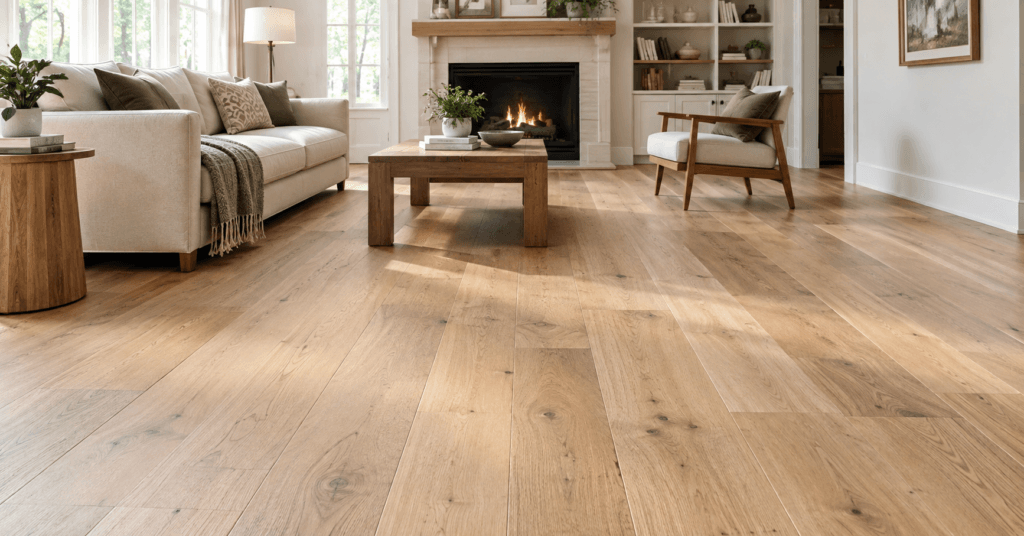
White oak flooring is a durable hardwood flooring option known for its neutral color, distinctive open grain, and strong performance in busy homes. North American white oak has a Janka hardness rating of about 1,360, making it slightly harder than red oak. Its natural color can range from light brown and cream to subtle gray or pinkish tones, which makes it easy to pair with both traditional and modern interiors.
If you are considering white oak flooring, the biggest decisions are not simply about color. You also need to choose between solid and engineered white oak, decide on the right grade and plank width, understand installation requirements, and consider how much maintenance your household is willing to handle. White oak is durable, but it is still natural wood and should not be treated as waterproof flooring.
What Is White Oak Flooring?
White oak flooring is made from wood belonging to the white oak group, with North American white oak being one of the best-known species. It is widely used for flooring because the wood combines strength with a distinctive grain and a relatively neutral appearance.
The National Wood Flooring Association describes white oak heartwood as light brown, with some boards showing pinkish or grayish tones, while the sapwood ranges from white to cream. Its grain is open, and the longer rays can create different visual effects depending on how the board is sawn.
That natural variation is part of the appeal. Two white oak floors can look completely different depending on the grade, cut, stain, finish, plank width, and installation pattern. You can keep the wood light and natural for a relaxed look or use a darker stain for a richer, more traditional appearance.
Is White Oak Flooring Durable?
Yes, white oak is a durable hardwood suitable for many high-traffic areas in a home. Its Janka hardness rating of approximately 1,360 means it can handle normal residential wear well, although no hardwood floor is completely scratch-proof or dent-proof.
The USDA Forest Service describes white oak as heavy, hard, strong, and durable, and notes that it accepts a variety of finishes. That combination makes it practical as well as attractive.
Still, hardness is only one part of flooring performance. Grit tracked indoors, pet claws, furniture movement, dropped objects, and poor maintenance can damage the finish or surface. A durable floor lasts much longer when the installation, finish, and daily care are appropriate for the household.
What Does a 1,360 Janka Rating Mean?
The Janka hardness test measures the force required to press a steel ball into wood to a specified depth. A higher number generally indicates greater resistance to indentation.
For homeowners, however, the number should be used as a comparison rather than a guarantee. A 1,360 rating does not mean white oak cannot scratch. It simply tells you that the wood has a good level of hardness for everyday flooring applications.
White Oak vs. Red Oak Flooring
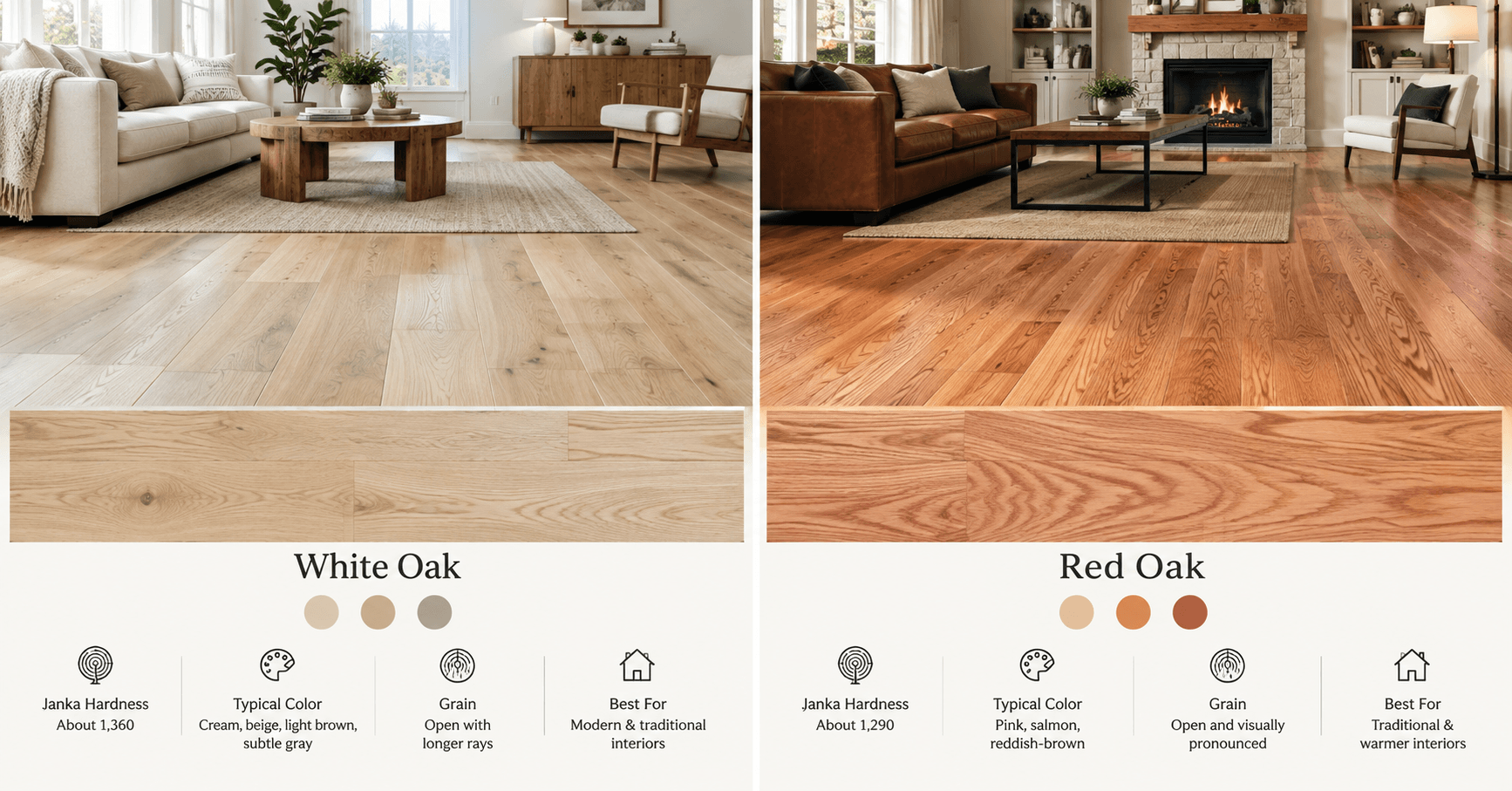
White oak and red oak are both established hardwood flooring choices, but their appearance is noticeably different.
White oak generally has a more neutral color palette, while red oak commonly shows warmer pink, salmon, or reddish undertones. White oak also has longer rays and can display different grain patterns depending on whether the boards are plainsawn, riftsawn, or quartersawn.
| Feature | White Oak | Red Oak |
| Janka hardness | About 1,360 | About 1,290 |
| Typical color | Cream, beige, light brown, subtle gray | Pink, salmon, reddish-brown |
| Grain | Open with longer rays | Open and visually pronounced |
| Design flexibility | Excellent | Excellent |
| Modern neutral interiors | Very suitable | May appear warmer |
| Traditional interiors | Very suitable | Very suitable |
The choice often comes down to the look you want. If you prefer neutral wood without strong red undertones, white oak may be the easier starting point. If you already have red oak flooring, stairs, trim, or cabinets, matching the existing wood may make more sense.
Solid vs. Engineered White Oak Flooring
Choosing between solid and engineered white oak flooring is one of the most important decisions in the project.
Solid white oak flooring is milled from a single piece of hardwood. Engineered white oak has a real white oak surface layer attached to a layered core. Both can provide the appearance of genuine white oak, but their construction and installation requirements are different.
Solid flooring is attractive for homeowners who want traditional hardwood and substantial material that can potentially be sanded and refinished several times. Engineered flooring can offer greater dimensional stability and may be more suitable for certain subfloors and installation situations.
Neither option is automatically better. The correct choice depends on your subfloor, moisture conditions, installation method, product construction, and long-term plans for the home.
White Oak Flooring Colors and Finishes
One reason white oak remains so versatile is its ability to work with many different finishes.
A natural white oak finish highlights the wood’s original color and grain. A light finish can create an airy appearance, while warmer stains can bring out beige and brown tones. Darker stains produce a more dramatic floor, and whitewashed treatments can give the boards a softer, contemporary appearance.
The final color depends on much more than the stain itself. The individual boards, grade, cut, lighting, finish chemistry, and surrounding colors all influence the result.
That is why choosing flooring from a small online photograph can be risky. Always look at a physical sample in your own room if possible. Place it near your walls, cabinets, furniture, and windows before making a final decision.
White Oak Flooring Grades and Grain Patterns
White oak flooring is available in different grades, and the grade affects how consistent or character-rich the floor looks.
A cleaner grade can have fewer visible knots and natural markings. Character-grade flooring embraces more variation, including knots, mineral streaks, color differences, and other natural features.
The way the wood is sawn also changes the appearance. Plainsawn boards can show broader, flowing grain, while riftsawn boards tend to have a tighter appearance. Quartersawn white oak can reveal distinctive ray patterns.
There is no universally best option. If you want a calm and consistent floor, a cleaner grade may be appropriate. If you want the flooring to feel natural and less formal, character white oak can be a better match.
Popular White Oak Flooring Styles
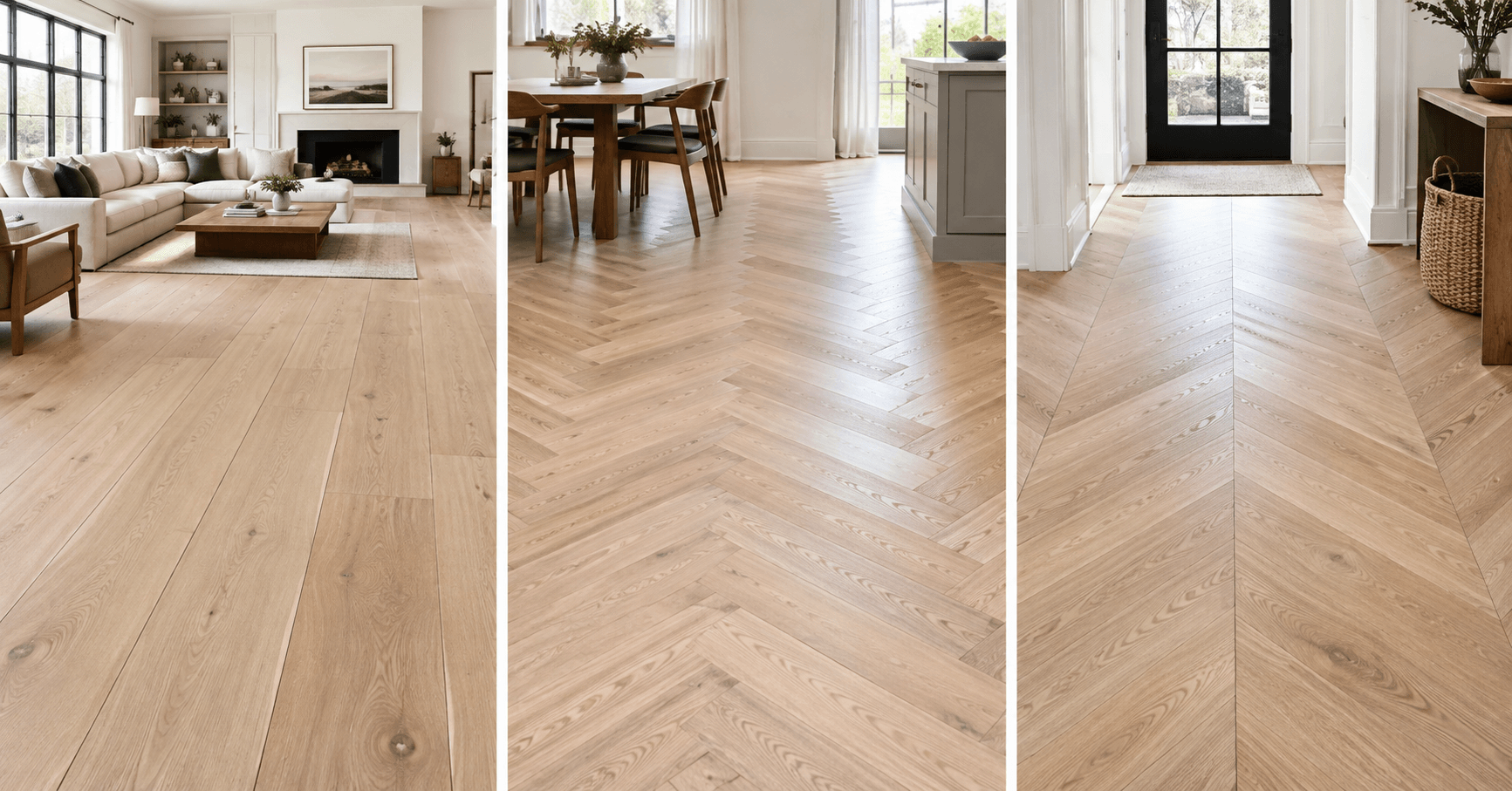
White oak works particularly well with modern flooring styles because its neutral color allows the grain to remain visible without dominating the room.
Wide-plank white oak flooring is one popular option. Wider boards create fewer seams and can give large rooms a more open appearance. Long boards can produce an even cleaner visual effect.
Herringbone and chevron are other possibilities. These patterns turn the flooring itself into a design feature and can work in both traditional and contemporary homes.
The trade-off is installation complexity. Patterned flooring requires accurate layout and careful cutting, so labor can cost more than a straightforward plank installation.
How Much Does White Oak Flooring Cost?
The price of white oak flooring varies considerably depending on whether you choose solid or engineered construction, the grade, plank width, finish, product quality, and installation method.
You should also account for costs beyond the flooring itself. Subfloor preparation, removal of existing flooring, transitions, trim work, delivery, waste, and installation can all affect the final project budget.
| Cost factor | What can increase the price |
| Flooring type | Premium engineered or solid products |
| Grade | Cleaner, more uniform grades |
| Width | Wide-plank flooring |
| Finish | Specialty stains and custom finishes |
| Pattern | Herringbone or chevron installation |
| Subfloor | Repairs, leveling, or preparation |
| Labor | Complex layouts and difficult rooms |
Rather than choosing flooring based only on the price per square foot, calculate the complete installed cost. A cheaper product can become expensive if it requires extensive preparation or does not suit your subfloor.
For more ways to control renovation expenses, see these home renovation money-saving tips.
Where Can You Install White Oak Flooring?
White oak flooring works well in many dry residential spaces, including bedrooms, living rooms, dining rooms, hallways, home offices, and other areas with normal household traffic.
Kitchens can also be suitable, but they require more care because spills and plumbing leaks are possible. Hardwood should not be considered waterproof simply because white oak performs well compared with some other wood species.
Bathrooms, laundry rooms, and areas with frequent standing water require much more careful product selection. Always follow the flooring manufacturer’s requirements for moisture levels, subfloor conditions, installation, and maintenance.
How to Maintain White Oak Floors
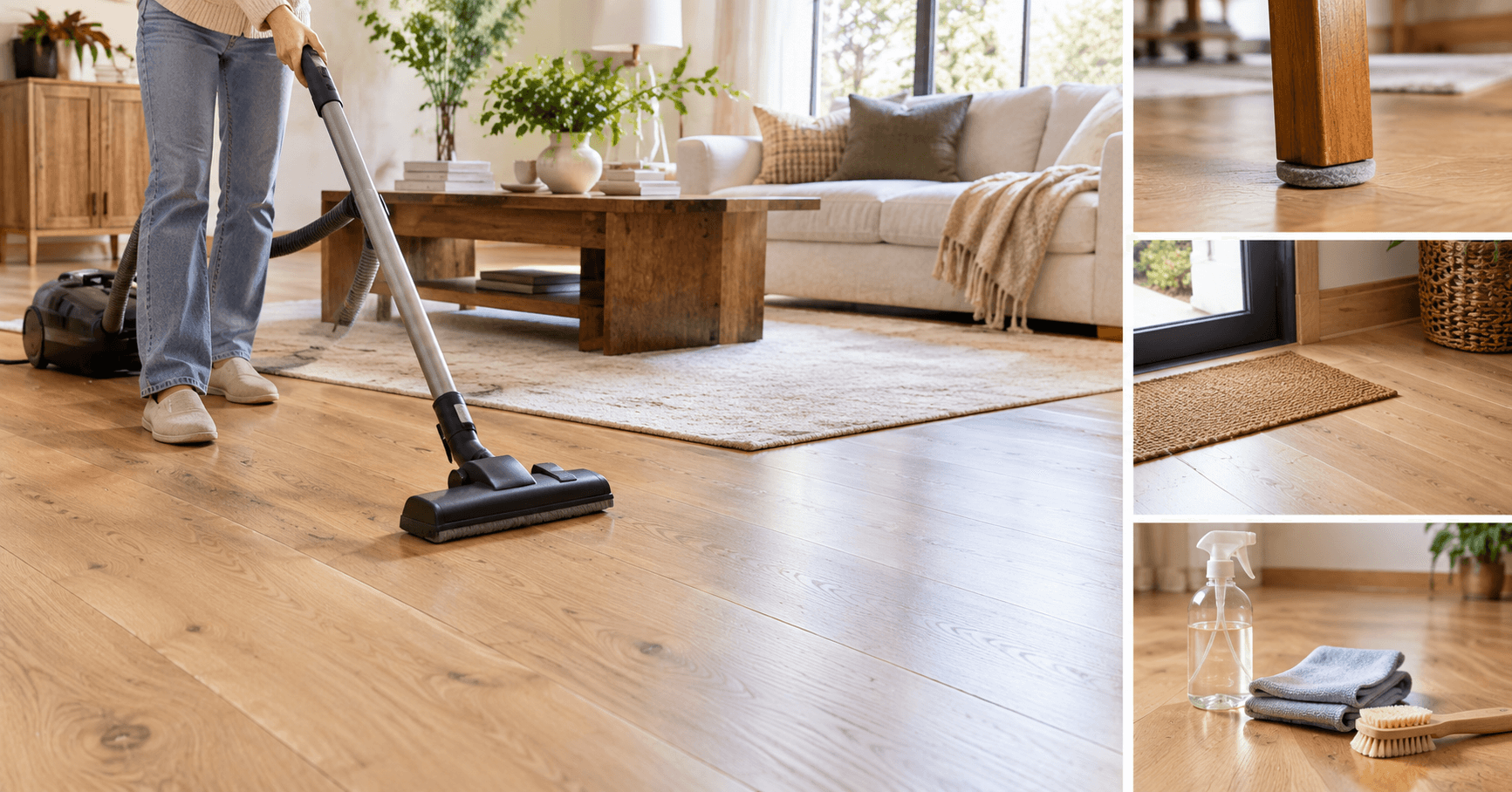
White oak flooring does not require complicated daily maintenance, but consistency matters.
Dust and grit should be removed regularly because abrasive particles can wear down the finish. Use a hardwood-safe vacuum or soft cleaning tool, and avoid excessive water during cleaning.
Furniture protection is another simple step that can make a noticeable difference. Felt pads under chairs and tables can help reduce surface scratches, while rugs near entrances can catch dirt before it reaches the floor.
If you already have hardwood flooring that has developed annoying movement or noise, you may also find this guide useful: how to fix squeaky hardwood floors.
The maintenance requirements also depend on the finish. A well-maintained finish protects the wood, but it eventually wears. Solid hardwood generally offers greater refinishing potential because the entire board is hardwood, while engineered flooring depends on the thickness of its real-wood wear layer.
White Oak Flooring Pros and Cons
White oak has a strong combination of durability, appearance, and flexibility, but it is not the perfect flooring material for every home.
White oak is a durable hardwood flooring option that can handle everyday household traffic when properly finished and maintained.
Pros
- Durable hardwood with a Janka rating around 1,360
- Neutral color that works with many interior styles
- Distinctive natural grain
- Available in several grades and cuts
- Takes a wide range of stains and finishes
- Available as both solid and engineered flooring
- Suitable for many busy residential spaces
- Can be refinished when the flooring construction allows it
Cons
- Quality white oak can be expensive
- It is not waterproof
- Poor moisture control can damage wood flooring
- Natural boards vary in color and grain
- Premium wide planks can cost more
- Complex patterns increase installation labor
- Engineered products differ in wear-layer thickness and construction
Is White Oak Flooring Worth It?
For many homeowners, white oak flooring is worth considering when durability and long-term design flexibility matter more than choosing the cheapest flooring option.
Its biggest advantage is balance. It has enough hardness for everyday residential use, but its appeal is not based solely on performance. The relatively neutral appearance gives you freedom to change furniture, wall colors, cabinets, and decorating styles without immediately making the floor look dated.
The smartest purchase is not necessarily the most expensive white oak product. Instead, choose the construction, grade, width, finish, and installation method that match your home.
Before ordering, check the subfloor, investigate moisture conditions, compare physical samples, and confirm the manufacturer’s installation requirements. Those steps can prevent a beautiful floor from becoming an expensive problem later.
If you are planning a broader flooring update, you can also compare white oak with other flooring approaches and design ideas, including checkerboard floor ideas.
Conclusion
White oak flooring is a durable, adaptable hardwood choice that combines natural character with considerable design flexibility. Its approximately 1,360 Janka hardness rating makes it suitable for many high-traffic residential spaces, while its cream, beige, light brown, grayish, and subtle pink tones give homeowners plenty of finishing options.
The most important decision is not simply whether white oak looks good. Consider where the flooring will be installed, whether solid or engineered construction makes more sense, how much variation you want, and what maintenance your household can realistically provide.
Choose the product based on the conditions of your home rather than a trend. When properly selected, installed, and maintained, white oak can provide a timeless hardwood surface that works just as well with changing interior styles years down the road.
FAQs
Is white oak flooring good for high-traffic areas?
Yes. White oak is a durable hardwood with a Janka hardness rating of about 1,360, making it suitable for many high-traffic residential areas. Proper cleaning, furniture protection, and moisture control are still necessary.
Is white oak better than red oak?
White oak is slightly harder and generally has a more neutral color palette than red oak. However, neither is universally better. The right choice depends on your preferred appearance, existing woodwork, budget, and installation conditions.
Is solid or engineered white oak better?
It depends on the project. Solid white oak provides substantial hardwood material and strong refinishing potential, while engineered white oak can offer greater dimensional stability and installation flexibility. Your subfloor and moisture conditions should guide the decision.
Does white oak flooring scratch easily?
White oak is relatively hard, but it can still scratch or dent. Dirt, grit, pet claws, furniture movement, and dropped objects can damage the surface. Protective pads and regular cleaning can help reduce everyday wear.
Is white oak flooring waterproof?
No. White oak has useful natural properties and is durable, but it is still wood. Standing water, excessive moisture, leaks, and unsuitable installation conditions can damage hardwood flooring. It should not be treated as a waterproof flooring product.

Samreen Khadim Hussain is a home improvement writer and content creator at Domelite Home. She specializes in making home renovation, interior design, and bathroom safety accessible to everyday US homeowners, turning technical subjects into clear, actionable advice. Her work is rooted in research, real-world practicality, and a genuine belief that a better home is within everyone’s reach.