
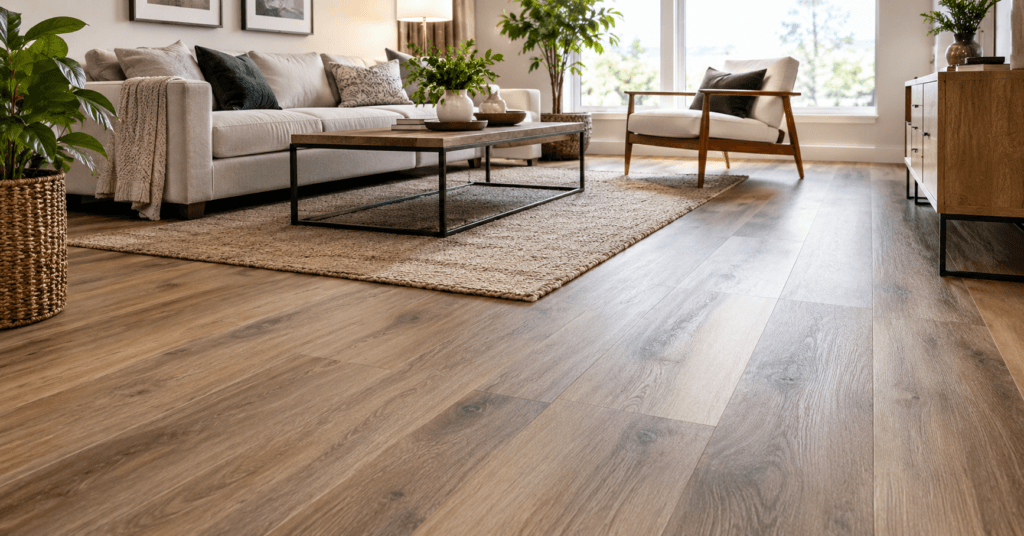
LVP Flooring Pros and Cons are worth understanding before you invest in a new floor. Luxury vinyl plank is popular with US homeowners because it offers a realistic wood look, strong water resistance, easy maintenance, and relatively simple installation. However, LVP also has drawbacks, including limited repairability, potential scratching and denting, and major differences in quality between products. If you are deciding between LVP, laminate, and hardwood, knowing these tradeoffs can help you choose a floor that fits your home, budget, and lifestyle.
Quick Answer: Is LVP Flooring a Good Choice?
Yes, LVP flooring is a strong choice for many US homes, especially kitchens, bathrooms, entryways, laundry rooms, basements, and busy living spaces. Its biggest advantages are water resistance, easy maintenance, realistic wood looks, comfortable underfoot feel, and relatively simple installation. The tradeoff is that LVP does not have the same repairability, natural material character, or potential longevity as well-maintained hardwood, and cheaper products can look and perform noticeably worse than premium planks.
The most important point is that not all LVP is equal. A thick, well-made plank with a durable wear layer, a stable core, a reputable certification, and a good warranty can be a very different product from bargain flooring selected mainly because of its low price. Installation matters just as much. Even excellent LVP can develop visible problems when installed over a damp, uneven, dirty, or poorly prepared subfloor.
For most homeowners, the decision comes down to priorities. If you want the appearance of wood without worrying as much about everyday spills, LVP makes practical sense. If your priority is a floor that can be sanded and refinished repeatedly and develops a natural patina over decades, hardwood remains the better fit. LVP is best viewed as practical flooring, not a perfect substitute for every type of real wood floor.
What Is LVP Flooring?
Luxury vinyl plank, or LVP, is a resilient flooring product designed to resemble wood flooring. It generally consists of several layers, including a protective wear layer, a printed decorative layer, and a vinyl-based core. Many products also include an attached underlayment. Depending on the product, the core may be flexible or more rigid, such as SPC or WPC construction.
LVP has become popular because it addresses a problem that traditional wood flooring cannot solve as easily: homeowners want a wood-style appearance while dealing with water, pets, children, muddy shoes, and everyday spills. A quality plank can provide convincing wood grain and color variation without requiring the same refinishing routine as solid hardwood.
There is also an important distinction between water-resistant and waterproof claims. Marketing language varies by manufacturer, so check the product’s installation instructions and warranty rather than assuming every LVP product can tolerate standing water indefinitely. The seams, edges, subfloor, and installation method can all affect real-world moisture performance.
There is also an important distinction between water-resistant and waterproof claims. Marketing language varies by manufacturer, so check the product’s installation instructions and warranty rather than assuming every LVP product can tolerate standing water indefinitely. The seams, edges, subfloor, and installation method can all affect real-world moisture performance.
LVP is available in many wood-inspired colors, plank widths, textures, and patterns, which makes it easy to coordinate with different interior styles. If you are comparing LVP with more decorative flooring options, these 7 Stunning Checkerboard Floor Ideas can give you ideas for a bolder floor design. The two styles create very different visual effects, so this comparison can help you decide whether you want your flooring to blend into the room or become a focal point.
Before buying, look beyond the picture on the box. Check plank thickness, wear-layer specification, warranty terms, installation requirements, and certification information. For a broader home project budget, see these home renovation tips and money-saving tricks.
The Main Pros of LVP Flooring
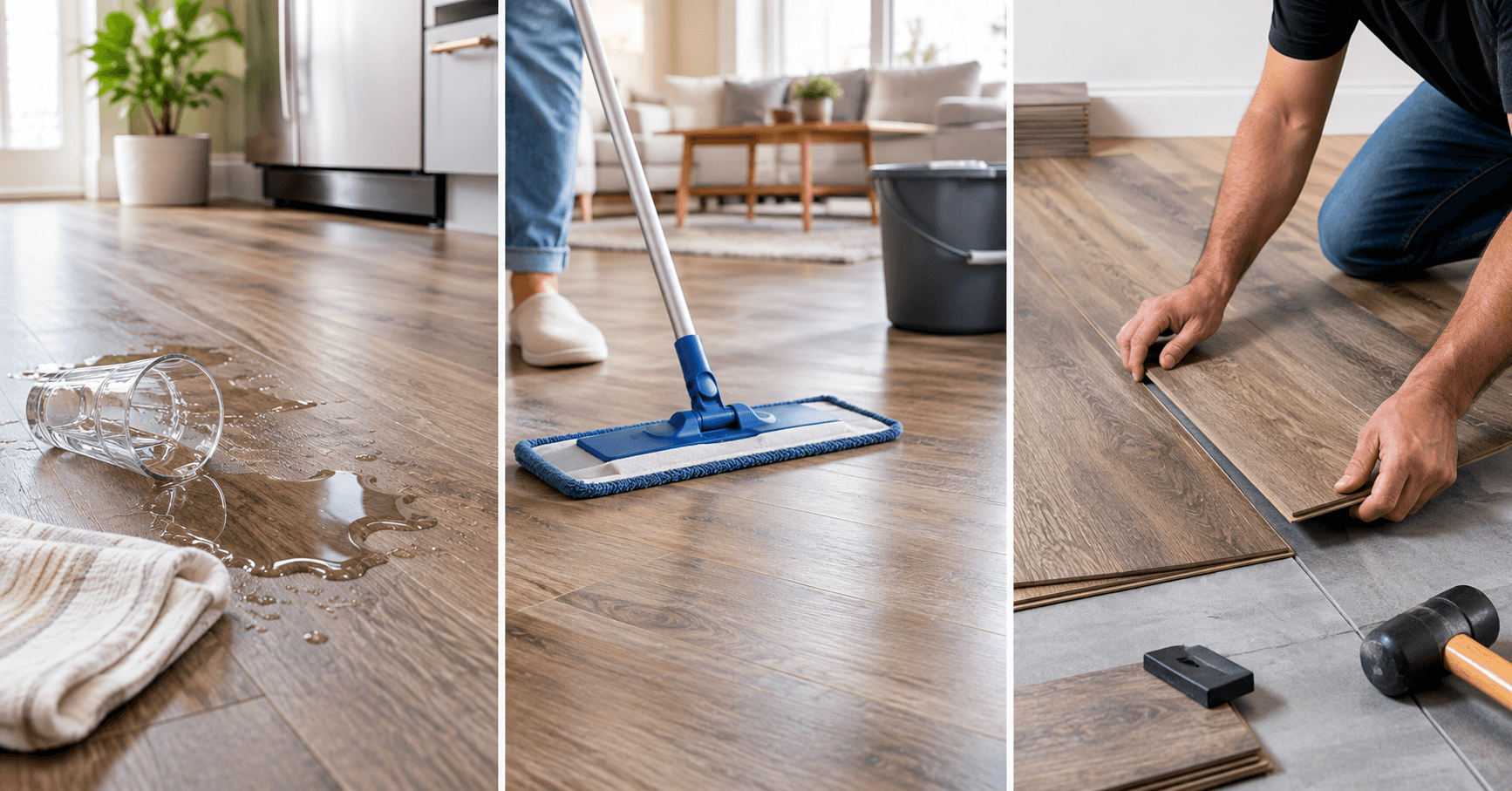
Water Resistance Makes LVP Practical
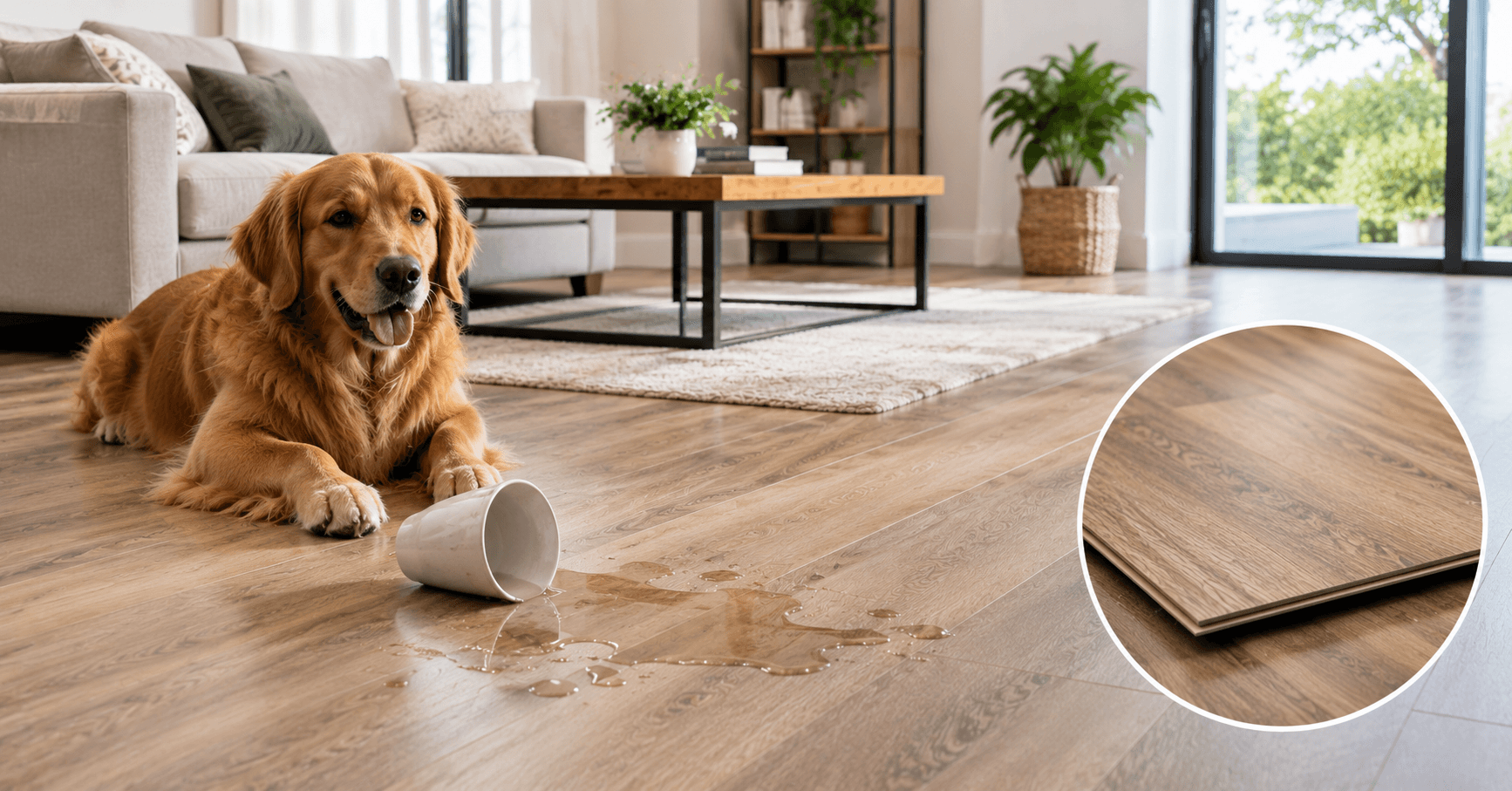
Water resistance is one of the biggest reasons homeowners choose LVP. Unlike traditional hardwood, vinyl flooring does not absorb water in the same way wood does. That makes it particularly useful in rooms where spills and humidity are routine rather than unusual.
Think about a kitchen. A dropped glass, leaking dishwasher, wet pet bowl, or spilled drink can happen without warning. With LVP, those accidents are generally easier to manage than they are with unfinished or poorly protected wood. Bathrooms and laundry rooms can also benefit, provided the specific product is approved for the application and installed according to the manufacturer’s instructions.
This does not mean LVP makes a room immune to water damage. Water can still reach the subfloor through gaps, damaged seams, leaks, or poor installation. A serious plumbing leak can cause problems underneath almost any flooring system. The practical advantage is that the flooring surface itself is much less vulnerable to ordinary household spills.
For households with dogs, children, or frequent guests, that difference can be significant. You get a wood-inspired appearance without treating every splash as an emergency.
Easy Cleaning and Low Maintenance
LVP is one of the easier flooring surfaces to maintain. Regular sweeping, vacuuming with a suitable floor setting, and damp mopping are usually enough for routine household cleaning. You generally do not need to wax it or periodically refinish the surface as you would with some traditional flooring materials.
That simplicity matters more than it sounds. A beautiful floor that requires specialized maintenance can become a burden in a busy household. LVP fits naturally into homes where the goal is to clean up quickly and move on with the day.
Cleaning products still deserve attention. Avoid assuming that every household cleaner is suitable for every vinyl floor. Follow the manufacturer’s care instructions, especially regarding steam cleaners, abrasive products, solvents, and excessive water. You can also see this practical guide on how to clean vinyl flooring for everyday maintenance ideas.
Another benefit is that the surface does not need to be polished to maintain its basic appearance. Good routine care can help protect the finish and reduce the accumulation of grit that may contribute to scratching over time.
DIY Installation Can Reduce Labor Costs
Many LVP products use floating click-lock installation, which can make them accessible to experienced DIY homeowners. Instead of fastening every plank to the subfloor, compatible planks can lock together and sit over an approved underlayment or prepared surface.
That can reduce installation labor, but it does not make the project foolproof. The subfloor needs to meet the manufacturer’s flatness requirements, transitions need to be planned, and expansion gaps may be required around the perimeter. Door jambs, cabinets, stairs, and irregular room shapes can also make installation considerably more complicated.
The biggest DIY mistake is focusing on snapping the planks together while ignoring what’s underneath them. A floating floor can reflect imperfections in the subfloor, and inadequate preparation can contribute to movement, gaps, noise, or premature wear.
So, yes, LVP can be DIY-friendly. It is not preparation-free. If you are replacing flooring as part of a larger project, make the flooring installation part of the overall renovation plan rather than treating it as an isolated weekend task.
The Main Cons of LVP Flooring
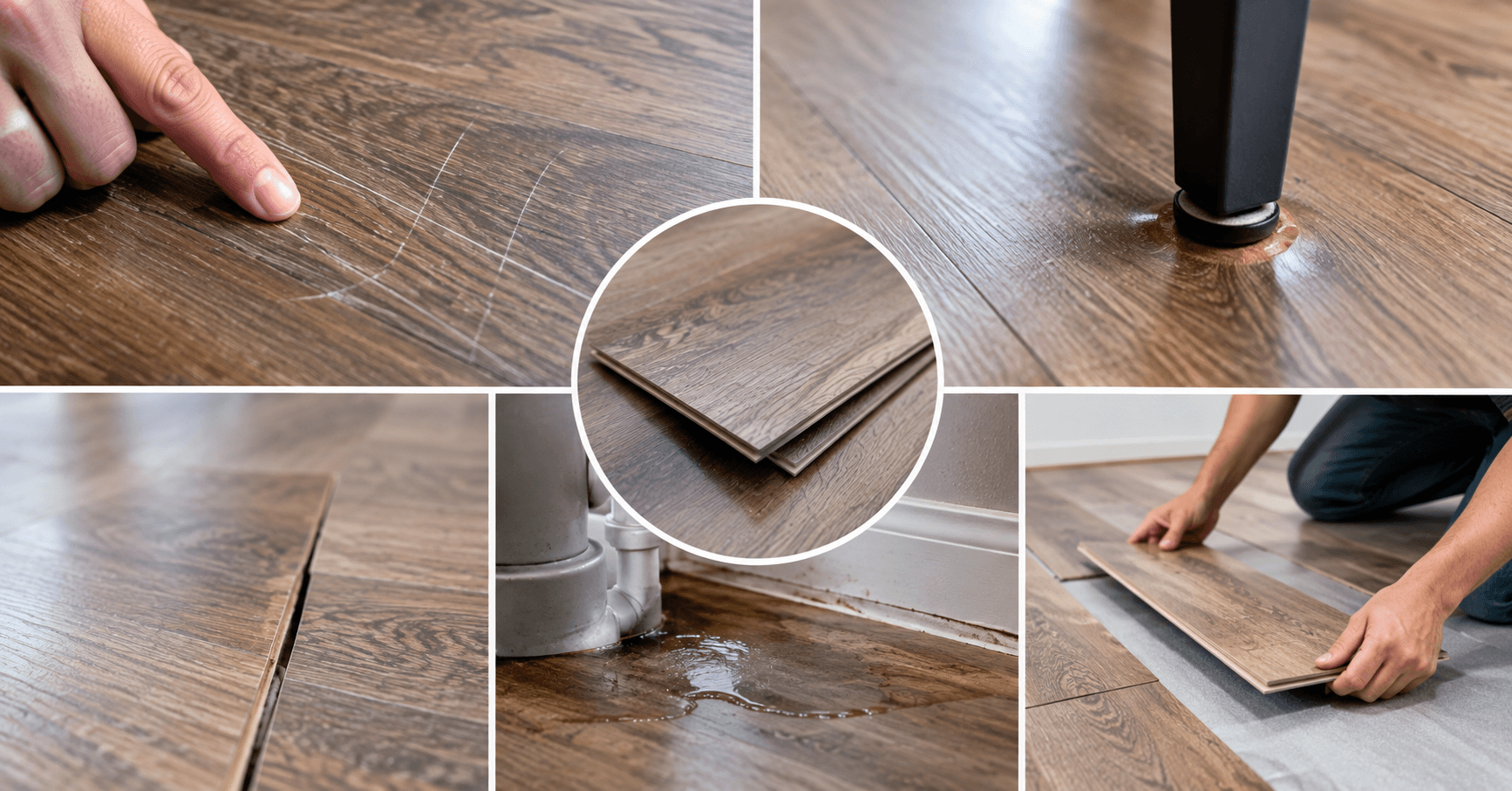
LVP Can Be Damaged by Sharp or Heavy Objects
LVP is durable, but it is not scratch-proof or indestructible. Dragging heavy furniture, dropping sharp objects, or allowing grit to remain under furniture can damage the wear layer or leave visible marks.
This is especially important for pet owners. Dogs’ nails do not automatically destroy quality LVP, but repeated running, turning, and scratching can eventually affect the finish. Furniture protection also matters. Felt pads under chairs and tables can reduce unnecessary abrasion, while lifting furniture instead of dragging it helps prevent accidental damage.
The good news is that individual planks can sometimes be replaced, particularly with floating installations, but matching an older floor can be difficult. A discontinued color may leave you with a repair that is structurally fine but visually obvious.
That is one reason buying a few extra planks at installation can be smart. Store them in accordance with the manufacturer’s recommendations so you have matching material available if a plank needs replacement years later.
Quality and Indoor Air Quality Can Vary
The quality of LVP products varies considerably, so price alone is not a reliable measure of performance or indoor-air suitability. Vinyl flooring can contain multiple materials and additives, and some products may emit volatile organic compounds, particularly when new.
Consumers can reduce uncertainty by looking for credible third-party product certifications and reviewing manufacturer documentation. FloorScore, for example, is a flooring-related indoor-air-quality certification program administered by SCS Global Services. The FloorScore program provides information about its certification approach.
The US Environmental Protection Agency also explains that indoor air can contain pollutants from building materials and household products. Its Indoor Air Quality resources provide broader guidance on managing indoor environmental quality.
This does not mean LVP is inherently unsafe. It means shoppers should avoid making broad claims based on the word “vinyl” alone. Look at the actual product, certification, installation instructions, and manufacturer’s disclosures. Ventilating the space during and after installation can also be sensible when recommended by the product manufacturer.
Subfloor Preparation Still Matters
LVP cannot hide a badly prepared floor as effectively as many people expect. Small imperfections may become visible through the finished flooring, while larger irregularities can affect how the planks lock together and perform.
Concrete and wood subfloors each have their own preparation requirements. Moisture testing may be necessary in some installations, particularly over concrete. The surface also needs to be clean and sufficiently flat according to the product’s specifications.
This is an easy place to save money the wrong way. Spending more on premium planks while skipping proper preparation can undermine the entire installation. If the existing floor is damaged, soft, damp, or significantly uneven, fix the underlying problem before covering it.
A good flooring project starts below eye level. The plank is only the visible part of the system.
How Much Does LVP Flooring Cost?
LVP pricing can range from budget-friendly to surprisingly expensive, depending on product quality, thickness, wear layer, construction, brand, and installation method. For a US homeowner, the total project price is more useful than the sticker price of the plank because labor, subfloor preparation, transitions, removal of old flooring, and disposal can materially change the final bill.
Budget products may be attractive for rentals, temporary renovations, or rooms where appearance and short-term cost matter most. Mid-range products often provide a better balance of appearance and durability for typical family homes. Premium LVP can offer thicker construction, better visual printing, stronger wear protection, and longer warranties, although paying more does not automatically guarantee a better product.
Ask for an installed quote when comparing flooring. A product that looks cheaper per square foot can become more expensive after you add underlayment, trim, removal, leveling, and labor.
Where Does LVP Work Best in a US Home?
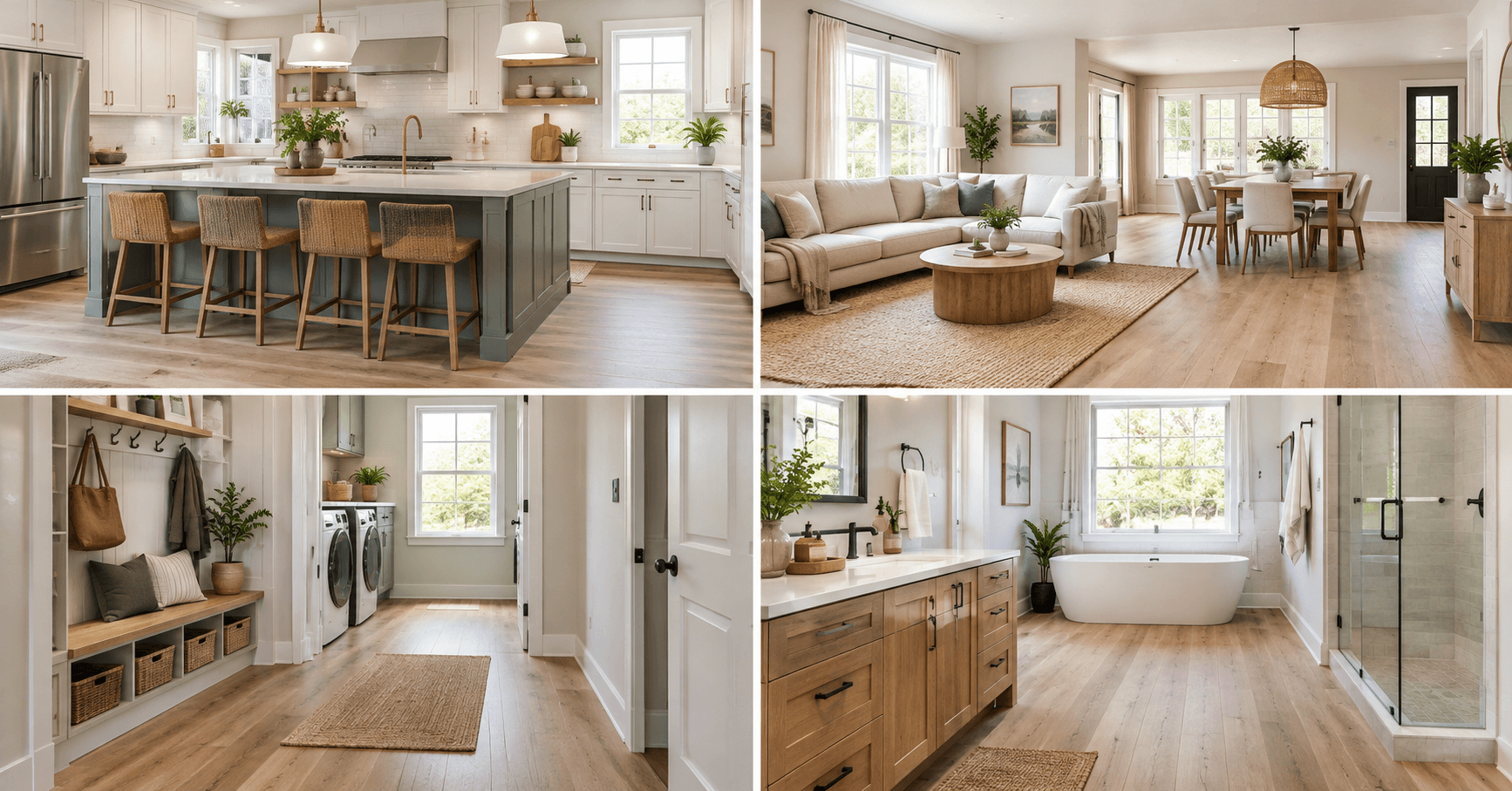
LVP works especially well in kitchens, hallways, living rooms, dining rooms, mudrooms, laundry areas, and many basements. These spaces experience regular foot traffic and benefit from a floor that is easy to clean and less sensitive to everyday spills.
It is also useful for open-concept homes because today’s LVP designs can create a continuous visual surface between several rooms. Wider planks and restrained color variation can make a space feel cohesive without requiring real wood throughout the entire floor plan.
For a bathroom, verify the product’s application rating and installation requirements rather than relying solely on the word “waterproof.” A bathroom has multiple moisture sources, including the toilet, tub, shower, and plumbing connections, so waterproof flooring does not replace proper waterproofing elsewhere.
Rooms Where You May Want Another Flooring Type
LVP may not be the best choice when your main goal is authentic natural material, maximum longevity, or a specific high-end architectural look. Solid hardwood can be sanded and refinished several times, giving it a repair advantage that vinyl cannot match in the same way.
Tile may make more sense where extreme moisture exposure, heat tolerance, or a particular design is the priority. Carpet remains attractive for bedrooms when warmth, softness, and sound absorption matter more than water resistance.
The right question is not simply, “Is LVP good?” It is, “Does LVP solve the problems this particular room has?” That approach usually produces a better flooring decision.
LVP vs. Laminate vs. Hardwood
| Feature | LVP | Laminate | Hardwood |
| Water resistance | Generally excellent, product dependent | Varies by product | More vulnerable to moisture |
| Wood appearance | Very good | Very good | Natural |
| Maintenance | Low | Low | Higher |
| Refinishing | No | No | Yes |
| DIY potential | Often good | Often good | Depends on product |
| Comfort | Slightly resilient | Firmer | Natural, varies by installation |
| Long-term repairability | Replace damaged plank | Replace damaged plank | Sand and refinish |
LVP vs. Laminate
LVP generally has the advantage where moisture is a major concern. Laminate is constructed differently and traditionally relied on wood-based fiberboard cores, although modern water-resistant laminate products have improved significantly.
Both can provide convincing wood visuals and floating installation options. The better choice depends on the room, product specifications, budget, and the performance characteristics you actually need.
LVP vs. Hardwood
Hardwood wins for natural material, refinishing potential, and long-term character, while LVP usually wins for moisture resistance, easy maintenance, and lower everyday fuss. Hardwood can also add a distinctive architectural quality that printed flooring cannot completely reproduce.
If you are renovating a forever home and love the look and feel of genuine wood, hardwood may justify the higher investment. If you have an active household and want predictable maintenance, LVP can be the more practical choice.
How to Choose Good LVP Flooring
Start with the wear layer, construction, warranty, and installation requirements rather than choosing solely from a sample’s color. Compare products from reputable manufacturers and read the actual warranty because exclusions can matter as much as the headline warranty length.
Look for realistic visuals instead of overly repetitive printed patterns. A floor can technically imitate oak while still looking artificial if the grain repeats obviously across the room. Samples viewed under your home’s natural and artificial lighting are more useful than tiny online swatches.
Check whether the product has a relevant third-party certification if indoor-air emissions are a concern. Also verify whether an attached pad is included, whether additional underlayment is allowed, and whether the product is approved for your specific subfloor.
Finally, buy enough material for the project plus a reasonable amount for future repairs. A slightly higher upfront cost can be worthwhile when it buys better construction, a stronger warranty, and fewer compromises.
Conclusion
The biggest LVP flooring pros are water resistance, easy cleaning, attractive wood-look designs, DIY potential, and practical durability. The biggest cons are susceptibility to scratching and dents, limited repair options compared with hardwood, variable product quality, and the need for proper subfloor preparation.
For many US households, those advantages make LVP an excellent everyday flooring option. It is particularly compelling in homes with pets, children, busy kitchens, laundry rooms, and areas where moisture is a concern. It becomes less compelling when the homeowner wants genuine wood, the ability to refinish the floor, or a premium natural material that can age for generations.
The smartest purchase is not necessarily the cheapest LVP. Choose the product based on the room, expected traffic, moisture exposure, wear protection, certification, installation requirements, and warranty. That turns LVP from a quick flooring purchase into a considered home-improvement decision.
LVP Flooring Pros and Cons FAQs
1. Is LVP flooring good for the whole house?
Yes, LVP can work throughout much of a house when the selected product is suitable for each room, and the installation requirements are followed. It is particularly practical for open-plan homes because the same flooring can visually connect multiple spaces. However, bedrooms, bathrooms, stairs, and other specialty areas may have different performance or installation requirements.
2. What is the biggest disadvantage of LVP flooring?
The biggest disadvantage is that LVP cannot be refinished like hardwood. Once the wear surface is badly damaged, the usual solution is replacement of the affected plank or flooring section. Lower-quality LVP can also show scratches, dents, or artificial-looking patterns sooner than premium products.
3. Does LVP decrease home value?
Not automatically. Well-installed, attractive LVP can be appealing to buyers because it is practical and easy to maintain. However, flooring choices should fit the price point and character of the property. In a luxury home where buyers expect genuine hardwood, premium LVP may not provide the same perceived value.
4. Is LVP better than laminate flooring?
Neither is universally better. LVP is generally the safer choice when moisture resistance is a priority, while quality laminate can provide excellent scratch resistance and realistic wood visuals. Compare the specifications of the actual products rather than judging an entire flooring category from one sample.
5. How long does LVP flooring last?
Its service life depends heavily on product quality, traffic, installation, maintenance, and exposure to abuse. A quality product installed correctly can provide many years of service, but there is no single lifespan that applies to every LVP floor. The manufacturer’s warranty and wear-layer specification are useful indicators when comparing products.

Samreen Khadim Hussain is a home improvement writer and content creator at Domelite Home. She specializes in making home renovation, interior design, and bathroom safety accessible to everyday US homeowners, turning technical subjects into clear, actionable advice. Her work is rooted in research, real-world practicality, and a genuine belief that a better home is within everyone’s reach.
2 thoughts on “LVP Flooring Pros and Cons: Is Luxury Vinyl Plank Worth It?”