

Quick Answer: What Should Be on a Home Maintenance Checklist?
A good home maintenance checklist covers the systems that protect your house, keep it comfortable, and prevent small defects from becoming expensive repairs. At a minimum, homeowners should regularly inspect the roof and gutters, HVAC equipment, plumbing, electrical safety devices, windows and doors, appliances, exterior drainage, and signs of moisture or pests. Some jobs are monthly, such as checking HVAC filters and testing smoke alarms, while others are seasonal, such as cleaning gutters before winter and servicing cooling equipment before summer. The right schedule depends on your home’s age, climate, construction, and equipment.
For most U.S. homeowners, the easiest approach is to divide maintenance into monthly, spring, summer, fall, and winter tasks. Keep a running list rather than waiting until something breaks. For example, a slow drain, cracked caulk, peeling exterior paint, or a small roof leak may seem harmless today, but each can allow water or moisture to create a much larger problem. If you’re buying a house, you can also use a detailed home inspection checklist for buyers to understand which areas deserve closer attention.
Why Regular Home Maintenance Matters
Your home is less like a finished product and more like a machine that happens to have rooms. Roofing materials weather, plumbing connections age, caulk dries out, filters collect debris, and mechanical equipment gradually loses efficiency. Preventive maintenance gives you a chance to spot those changes while they are still manageable. It also makes unexpected breakdowns less likely, although no checklist can eliminate emergency repairs.
There is a financial reason to stay organized, too. A neglected gutter can contribute to water intrusion; an unnoticed plumbing leak can damage cabinets or flooring; and a dirty HVAC filter can restrict airflow and make the system work harder. Maintenance also helps preserve the condition and appeal of your property if you eventually sell. The goal isn’t to spend every weekend fixing things; it’s to spend a few minutes checking the right things before they become expensive.
The Difference Between Preventive and Reactive Maintenance
Preventive maintenance means taking action before failure occurs. Changing a filter, clearing debris from a drain, inspecting weatherstripping, or scheduling HVAC service are examples. Reactive maintenance begins after something has already failed, such as replacing a furnace that stopped working or repairing water damage from a leak.
You will inevitably need some reactive repairs because houses are exposed to weather, wear, accidents, and aging. Still, preventive care can reduce avoidable failures and help you plan major expenses instead of being surprised by them. A useful rule is simple: if a component is designed to be inspected, cleaned, lubricated, filtered, sealed, or serviced, put it on your calendar.
Monthly Home Maintenance Checklist
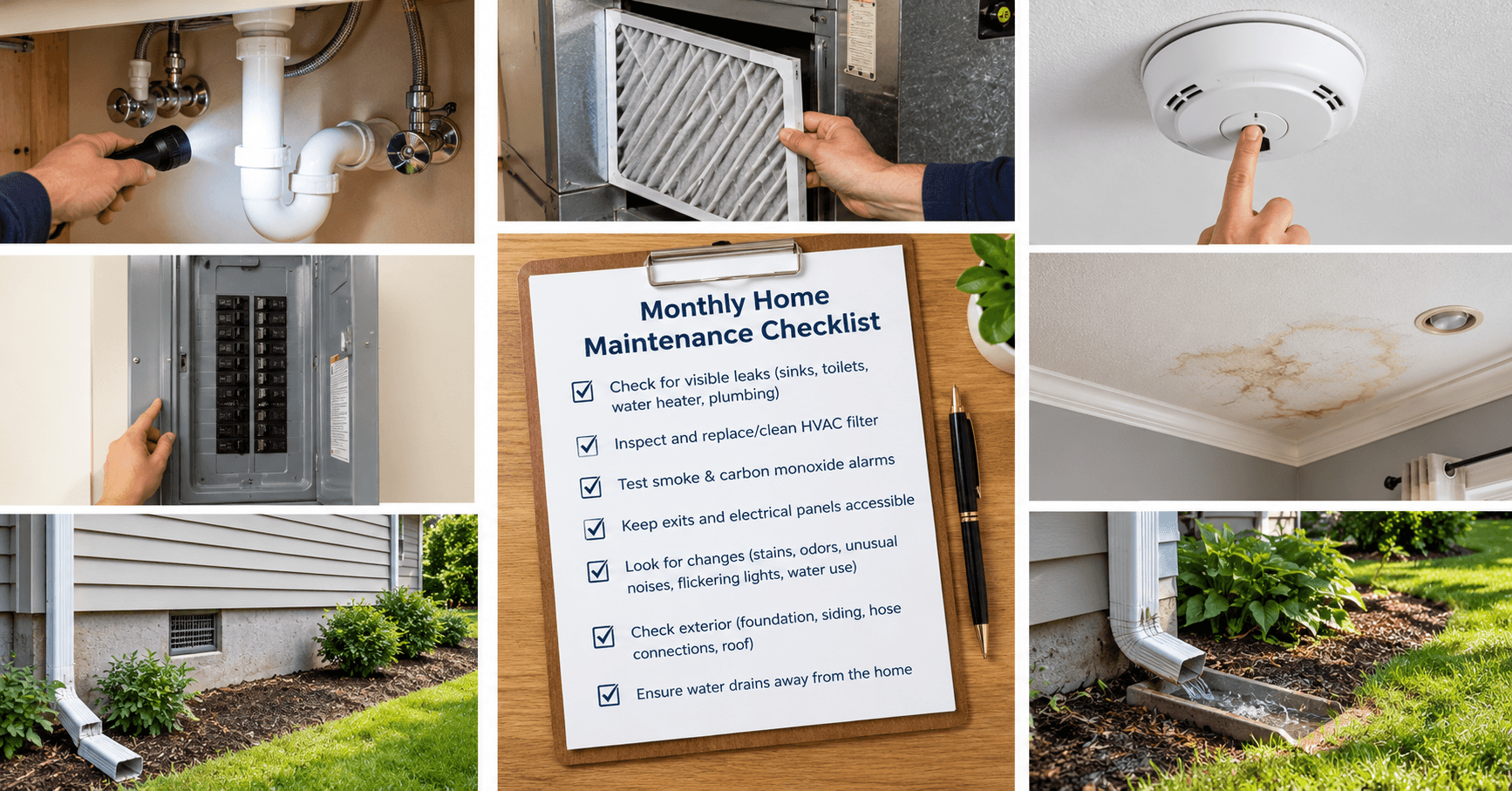
Monthly maintenance should be short enough that you actually do it. Walk through the house and look for visible leaks around sinks, toilets, water heaters, and exposed plumbing. Check the HVAC filter and replace or clean it according to the equipment manufacturer’s recommendations rather than relying on a one-size-fits-all calendar. Test smoke and carbon monoxide alarms according to manufacturer instructions, and make sure exits and electrical panels remain accessible.
Pay attention to changes rather than trying to diagnose everything yourself. A new stain on a ceiling, unexplained musty odor, unusual HVAC noise, flickering light, or sudden increase in water use deserves investigation. Outside, look at the foundation, siding, hose connections, and visible roof areas for obvious damage. Also check that water is draining away from the home rather than collecting against the foundation after rain.
Spring Home Maintenance Checklist
Spring is the ideal time for a home maintenance reset because winter can leave behind moisture, debris, damaged seals, and stressed exterior materials. Start with the roof from ground level or use a qualified professional for areas that aren’t safely accessible. Look for missing or damaged shingles, damaged flashing, sagging areas, and signs of water intrusion in the attic or upper ceilings. Clean gutters and downspouts, then confirm that downspouts discharge water away from the foundation.
Next, inspect exterior caulking around windows and doors, screens, siding transitions, and other penetrations. Check outdoor faucets for leaks after freezing temperatures have passed. If your home uses air conditioning, make sure the outdoor unit is unobstructed by leaves, vegetation, or stored items and arrange professional service when appropriate. Spring is also a sensible time to review your emergency supplies and look at the condition of exterior paint and trim.
Roof, Gutters, and Exterior Inspection
Don’t turn a roof inspection into a risky DIY climbing project. From the ground, binoculars can help you spot obvious damage, while an attic inspection can reveal staining or daylight where it shouldn’t be. Gutters should be free of accumulated leaves and sediment, but cleaning them safely may require professional equipment, particularly on multi-story houses.
Exterior walls deserve attention as well. Look for cracks, damaged siding, deteriorated trim, loose caulk, and areas where water appears to remain after rainfall. Early repairs are usually easier than rebuilding a section of damaged material later. If you’re looking for low-cost exterior improvements at the same time, these home exterior hacks that add real value can help you combine maintenance with curb-appeal upgrades.
Summer Home Maintenance Checklist
Summer maintenance focuses heavily on cooling, water management, outdoor areas, and heat exposure. Check that your air-conditioning system is cooling consistently and that supply and return vents aren’t blocked by furniture or household items. Inspect condensate drainage where accessible, because clogged or improperly draining condensate can contribute to moisture damage. If the system is struggling to maintain temperature, making unusual sounds, or repeatedly cycling, professional evaluation is usually smarter than repeatedly resetting it.
Walk around the property after heavy summer storms. Confirm that gutters and downspouts continue to move water away from the house and that landscaping isn’t directing runoff toward the foundation. Inspect decks, porches, fences, and stairs for loose components, decay, or damaged surfaces. If you have a sprinkler system, check for broken heads and overspray that could keep siding or foundation areas unnecessarily wet.
Fall Home Maintenance Checklist
Fall is your preparation window before freezing temperatures, storms, and increased heating demand arrive. Clean gutters and downspouts again if trees around your property shed heavily. Inspect the roof and exterior for damage that could allow winter precipitation into the structure. Remove leaves from areas where they can block drainage or trap moisture, while avoiding practices that could damage roofing or landscaping.
Inside, arrange heating-system maintenance as recommended by the manufacturer or HVAC professional. Check that heating vents and returns are unobstructed, and inspect accessible ductwork for obvious problems. If you have a fireplace or wood-burning appliance, follow appropriate inspection and cleaning requirements before using it. Replace batteries or entire alarm units when required by their manufacturer’s service life, and make sure everyone in the household understands the home’s emergency plan.
This Old House maintains a detailed checklist that covers fall as well.
Heating System and Weatherization Tasks
Weatherization is about keeping conditioned air inside and outdoor temperatures outside. Inspect weatherstripping around exterior doors and operable windows, and replace damaged material when necessary. Look at exposed pipes in vulnerable areas and take appropriate precautions for freezing conditions based on your home’s plumbing configuration and local climate.
The U.S. Department of Energy Home Energy Checklist is a useful authoritative resource for home energy and maintenance practices. Sealing obvious air leaks can improve comfort, but don’t block required ventilation or make changes that interfere with combustion appliances. When in doubt, have a qualified professional evaluate the system.
Winter Home Maintenance Checklist
Winter shifts maintenance indoors while making weather-related risks more important. After significant storms, inspect the property from a safe location for visible damage, fallen branches, blocked drainage, or ice-related problems. Keep exterior vents and exhaust outlets clear of snow and ice, following the appliance manufacturer’s safety guidance. Never use fuel-burning equipment indoors unless it is specifically designed and approved for that use.
Watch for frozen-pipe warning signs, including unusually low water flow or exposed pipes becoming extremely cold. Know where your main water shutoff is before an emergency happens. If a pipe freezes, avoid unsafe methods such as open flames and contact a qualified plumber when appropriate. Winter is also a good time to handle small interior repairs because indoor work is often easier when outdoor projects are limited.
For a comprehensive seasonal breakdown of exterior and structural maintenance tasks, This Old House maintains a detailed checklist at thisoldhouse.com that covers fall and winter priorities for US homeowners.
HVAC Maintenance Tasks Homeowners Shouldn’t Skip
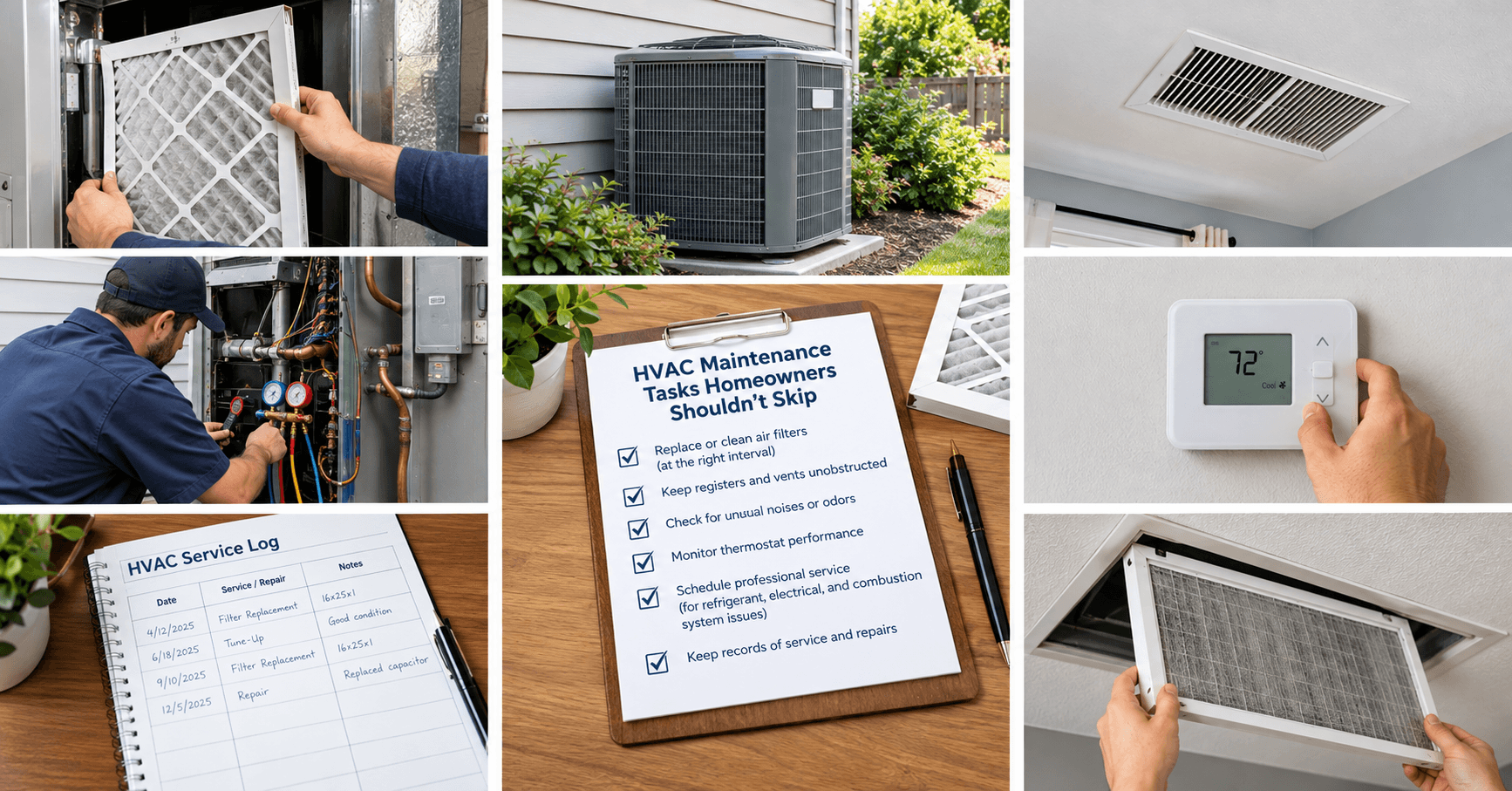
HVAC equipment represents one of the home’s most important comfort systems, so it deserves a dedicated place on your checklist. Filters need regular attention, but the correct replacement interval varies with filter type, equipment, household conditions, pets, and manufacturer recommendations. Don’t assume a thicker or more restrictive filter is automatically better; the HVAC system needs to be compatible with the filter’s airflow characteristics.
Homeowners can handle simple tasks such as keeping registers unobstructed and replacing accessible filters, while refrigerant work, electrical repairs, combustion-system problems, and complex mechanical diagnosis should be left to qualified professionals. Keep records of service dates and repairs. Those records become surprisingly useful when troubleshooting problems or preparing to sell the property.
Plumbing and Water-System Maintenance
Plumbing problems often begin quietly. Check under sinks for moisture, corrosion, swollen cabinet material, or unusual odors. Look around toilets for movement or water where it shouldn’t be, and pay attention to faucets that drip after being fully closed. A minor faucet repair can sometimes be straightforward; this guide to fixing a dripping faucet covers common situations.
Know the locations of your main water shutoff and individual fixture shutoffs. Test accessible shutoff valves carefully rather than forcing a valve that has become stuck. Don’t ignore persistent slow drains, unexplained water bills, repeated clogs, or damp areas because these symptoms can indicate a problem beyond the fixture itself. Water damage has a habit of traveling farther than the original leak suggests.
Electrical and Safety Checks
Electrical maintenance should prioritize observation and safety rather than ambitious DIY work. Test ground-fault circuit interrupter protection where installed according to the device manufacturer’s instructions, and test smoke and carbon monoxide alarms regularly. Look for damaged cords, loose outlets, scorch marks, buzzing, unusual heat, or repeatedly tripped breakers. These aren’t cosmetic issues; they warrant prompt attention.
Keep the electrical panel accessible and never use a breaker box as household storage. If a breaker repeatedly trips, don’t simply keep resetting it without finding the underlying cause. Electrical systems can present shock and fire hazards, so work involving wiring, panels, or uncertain conditions should be handled by a qualified electrician.
Kitchen and Bathroom Maintenance
Kitchens and bathrooms combine water, humidity, electricity, heat, and heavy daily use, making them high-priority maintenance zones. Inspect caulk around tubs, showers, sinks, and countertops for gaps or deterioration. Check under cabinets for leaks and swelling, clean appliance filters where applicable, and inspect range hoods and exhaust fans for accumulated grease or dust.
Bathrooms deserve special attention to ventilation because persistent humidity can encourage mold and material deterioration. Make sure exhaust fans actually move moisture outside when they are designed to do so. In the kitchen, clean appliance components according to their manuals rather than using harsh products indiscriminately. Small maintenance jobs here can protect cabinets, flooring, countertops, and wall finishes.
Doors, Windows, and Weatherproofing
Doors and windows affect security, comfort, energy use, and moisture control. Open and close them periodically to identify sticking, damaged hardware, failed seals, or unusual gaps. Inspect weatherstripping and exterior caulk, especially around openings exposed to driving rain. A door that suddenly becomes difficult to close can sometimes signal a hardware problem, but movement in the structure or frame can have other causes.
Sliding doors deserve particular attention because tracks collect dirt and debris. Keep tracks clean and inspect rollers and locks for problems. For homeowners dealing with drafts around sliding glass doors, this guide to sliding glass door weather stripping provides a useful maintenance-specific reference.
Exterior, Yard, and Drainage Maintenance
Your yard is part of the home’s drainage system whether you planned it that way or not. Keep leaves, soil, mulch, and other material from obstructing drainage routes. Trees and large branches should be monitored for dead, damaged, or unstable growth, particularly before severe weather. Don’t attempt hazardous tree work simply because a branch looks manageable from the ground.
Inspect walkways, steps, railings, decks, and fences for movement, deterioration, or trip hazards. Look for places where water consistently pools near the foundation. If the same area remains wet after ordinary rainfall, the solution may involve grading, drainage, gutters, or another underlying issue rather than simply adding more soil.
Appliance and Major-System Maintenance
Every major appliance should have its own basic maintenance routine. Clean dryer lint filters after every load and inspect the dryer vent system periodically for buildup or restricted airflow. Clean refrigerator coils if the manufacturer permits and recommends it, inspect dishwasher filters where applicable, and maintain washing-machine hoses and connections.
Create a simple record containing the appliance model, installation date, warranty information, service history, and recommended maintenance. Do the same for major HVAC, water-heating, and other mechanical equipment. This information makes future repairs easier and helps you decide when replacement may make more financial sense than continued repair.
Home Maintenance Checklist for New Homeowners
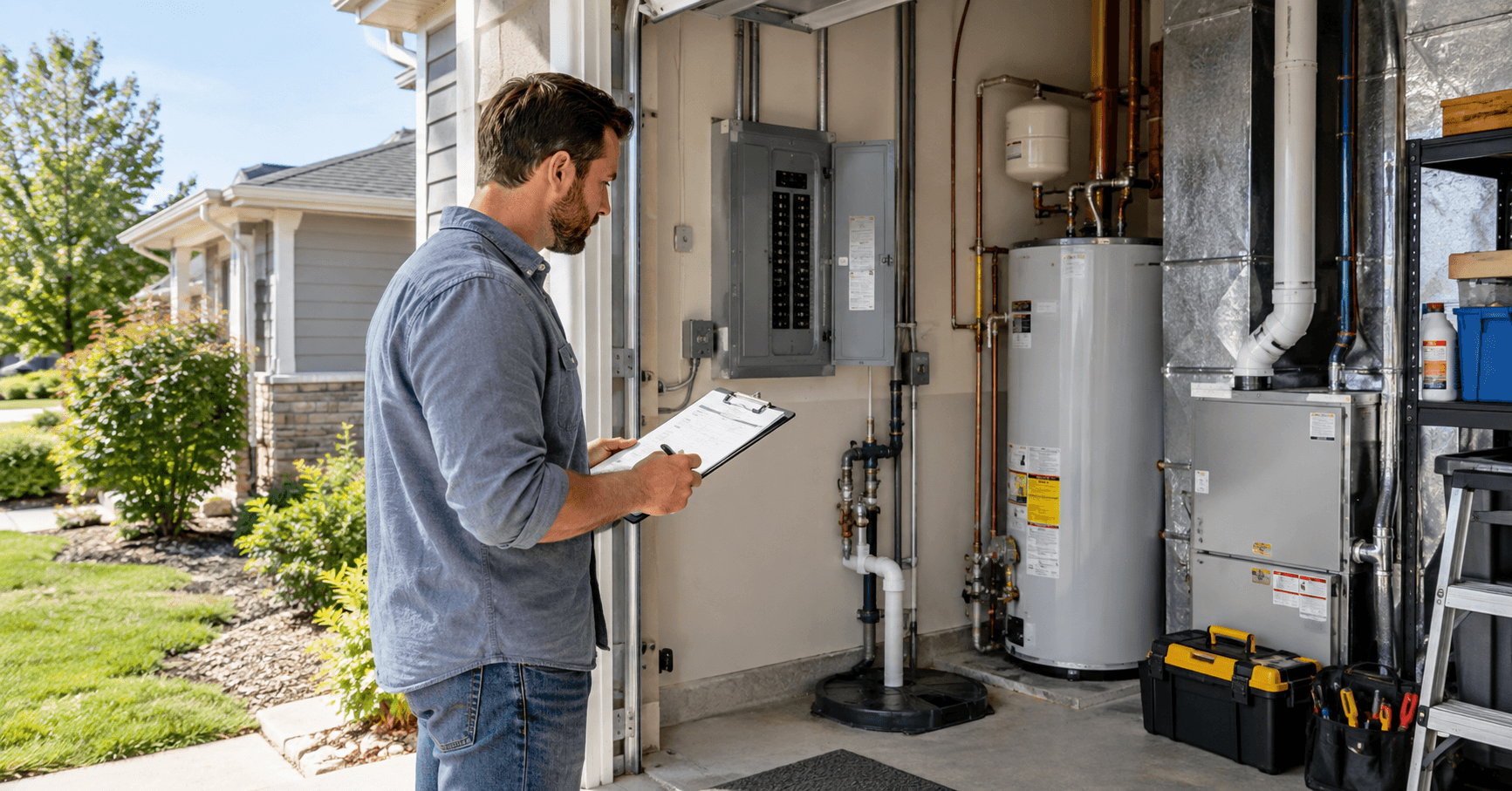
New homeowners should begin by learning the house rather than immediately trying to improve it. Locate the main water shutoff, electrical panel, gas shutoff if applicable, HVAC equipment, water heater, sump pump if present, and exterior drainage points. Find the manuals and model numbers for major equipment and record important service dates. You don’t want to discover where the water shutoff is while standing ankle-deep in a leaking room.
A home inspection report can become your first maintenance roadmap. Separate recommendations into urgent repairs, preventive work, and optional improvements. This prevents cosmetic projects from competing with problems that can affect the building envelope, safety, or major systems.
What Homeowners Can DIY and When to Call a Pro
DIY maintenance makes sense when the task is low-risk, clearly understood, and appropriate for the homeowner’s tools and skill level. Cleaning filters, replacing compatible weatherstripping, clearing accessible debris, touching up minor finishes, and performing visual inspections generally fall into that category. Read the manufacturer’s instructions before servicing equipment, because a seemingly simple product can have specific safety requirements.
Bring in a professional for work involving structural concerns, electrical wiring, gas systems, refrigerants, significant roof access, hazardous trees, major leaks, or anything you cannot safely diagnose. The cheapest repair isn’t necessarily the one with the lowest price today. A qualified professional can sometimes prevent an inexpensive-looking DIY mistake from turning into a much larger bill.
A Simple Home Maintenance Schedule You Can Actually Follow
The easiest maintenance plan is one that fits your life. Put monthly checks on a recurring calendar reminder, then assign spring and fall inspections to weekends when you normally have more time. Keep a running maintenance log in a notebook, spreadsheet, or phone app and record what you inspected, what you changed, and what needs professional attention.
A practical schedule looks like this:
| Frequency | Priority Tasks |
| Monthly | Check filters, leaks, alarms, drains, and visible exterior problems |
| Spring | Roof, gutters, exterior, AC, drainage, outdoor plumbing |
| Summer | Cooling system, storm damage, decks, yard, irrigation |
| Fall | Gutters, heating system, weatherstripping, winter preparation |
| Winter | Frozen-pipe precautions, vents, storm checks, indoor repairs |
| Annually | Major-system servicing, safety review, maintenance records |
Home Maintenance Costs: How to Budget Without Surprises
There isn’t one universal annual maintenance number that works for every American home. A 30-year-old house with aging mechanical systems, mature trees, and a large exterior may demand a very different budget from a newer townhouse. Your local climate matters too: freezing temperatures, hurricanes, heavy snowfall, wildfire exposure, humidity, and extreme heat all influence maintenance requirements.
Instead of relying exclusively on a generic percentage, review your home’s age and replacement history. List major systems and estimate when they may require service or replacement, then keep an emergency reserve for unexpected repairs. A useful mindset is to treat maintenance as an ongoing household expense rather than an occasional nuisance. That shift makes a $200 repair less alarming because you have planned for the possibility instead of pretending the house will never need one.
Conclusion: Turn Home Maintenance Into a Routine
A home maintenance checklist doesn’t need to turn your weekends into a never-ending repair project. Its real purpose is to help you notice changes early, protect expensive systems, maintain safety, and keep your property in good condition. Break the work into monthly and seasonal tasks, document what you find, and don’t hesitate to hire a professional when a job involves meaningful safety or property risk.
Start small: inspect for leaks, check your HVAC filter, test your safety alarms, examine drainage, and look over the exterior. Once those habits become routine, maintenance feels less like an emergency and more like ordinary homeownership. That’s the sweet spot: a house that gets attention before it demands it.
FAQs About Home Maintenance
How often should you do home maintenance?
A quick inspection every month works well for many routine tasks, while larger inspections are best scheduled seasonally. HVAC servicing, roof inspections, appliance maintenance, and other specialized work should follow manufacturer recommendations and local conditions. Older homes may need more frequent attention.
What home maintenance should be done every year?
Annual priorities commonly include inspecting the roof and exterior, cleaning gutters, reviewing HVAC equipment, checking plumbing for leaks, testing safety devices, inspecting weatherstripping, and reviewing major appliances. The exact schedule should reflect your home’s equipment and climate.
What is the most important home maintenance task?
There isn’t one task that is universally most important. Water intrusion, electrical safety, heating and cooling, roof condition, drainage, and structural concerns all deserve prompt attention when problems appear. A combination of regular inspections and timely repairs is more valuable than focusing on one component.
Should homeowners service their HVAC every year?
Many HVAC manufacturers and industry professionals recommend regular professional maintenance, but the appropriate frequency depends on the equipment, manufacturer guidance, system type, and operating conditions. Homeowners should at least keep filters and airflow pathways maintained according to the system’s requirements.
How can I make a home maintenance checklist easier to manage?
Divide the checklist into monthly and seasonal categories, then use recurring calendar reminders. Keep a maintenance log with repair receipts, appliance model numbers, service dates, and unresolved issues. A short, consistent routine is much easier to maintain than one giant annual checklist that gets forgotten.

Samreen Khadim Hussain is a home improvement writer and content creator at Domelite Home. She specializes in making home renovation, interior design, and bathroom safety accessible to everyday US homeowners, turning technical subjects into clear, actionable advice. Her work is rooted in research, real-world practicality, and a genuine belief that a better home is within everyone’s reach.
1 thought on “Home Maintenance Checklist: A Complete Year-Round Guide for U.S. Homeowners”